IMAGINE A LITTLE MASSAGE CHAPEL
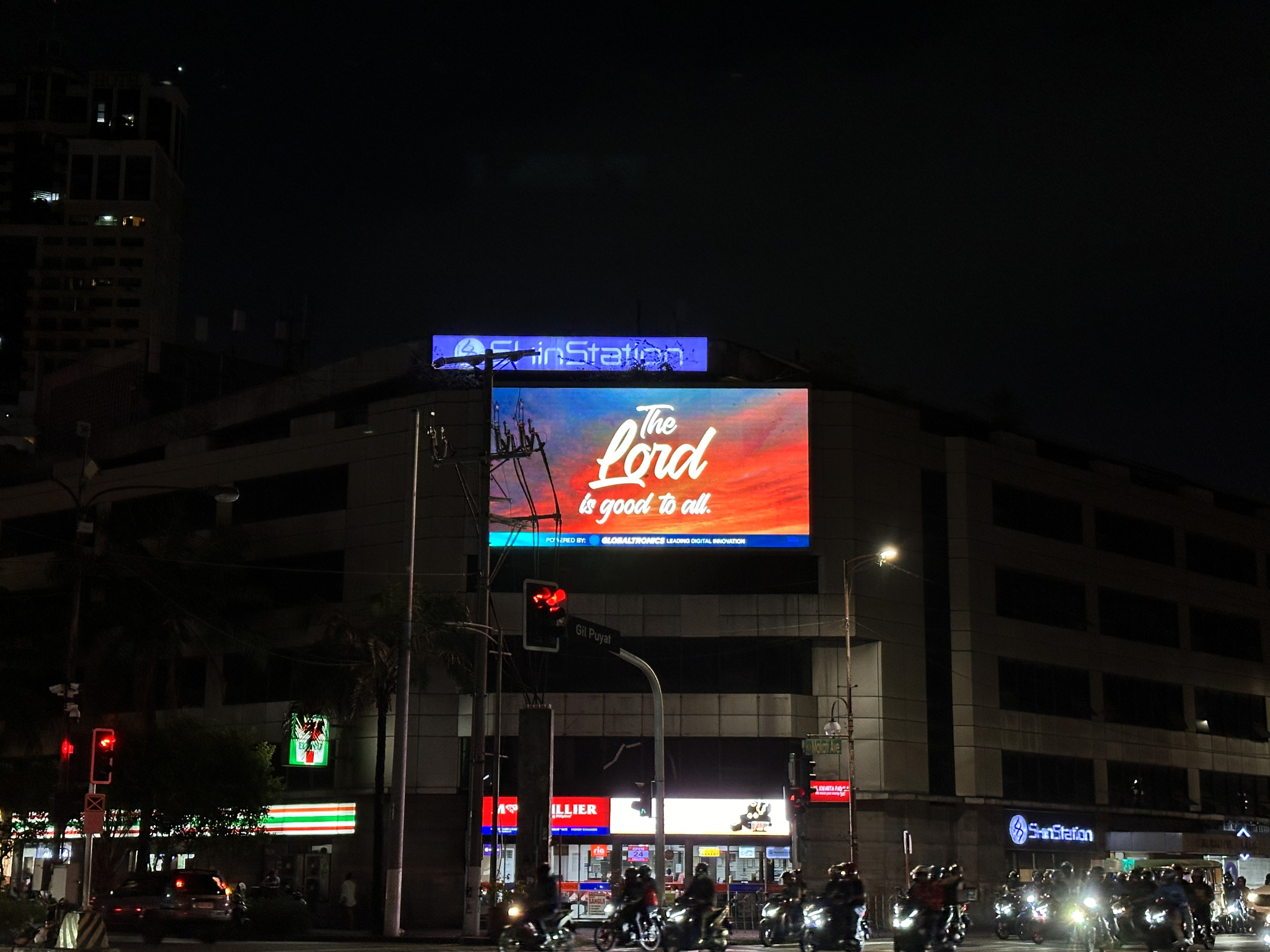
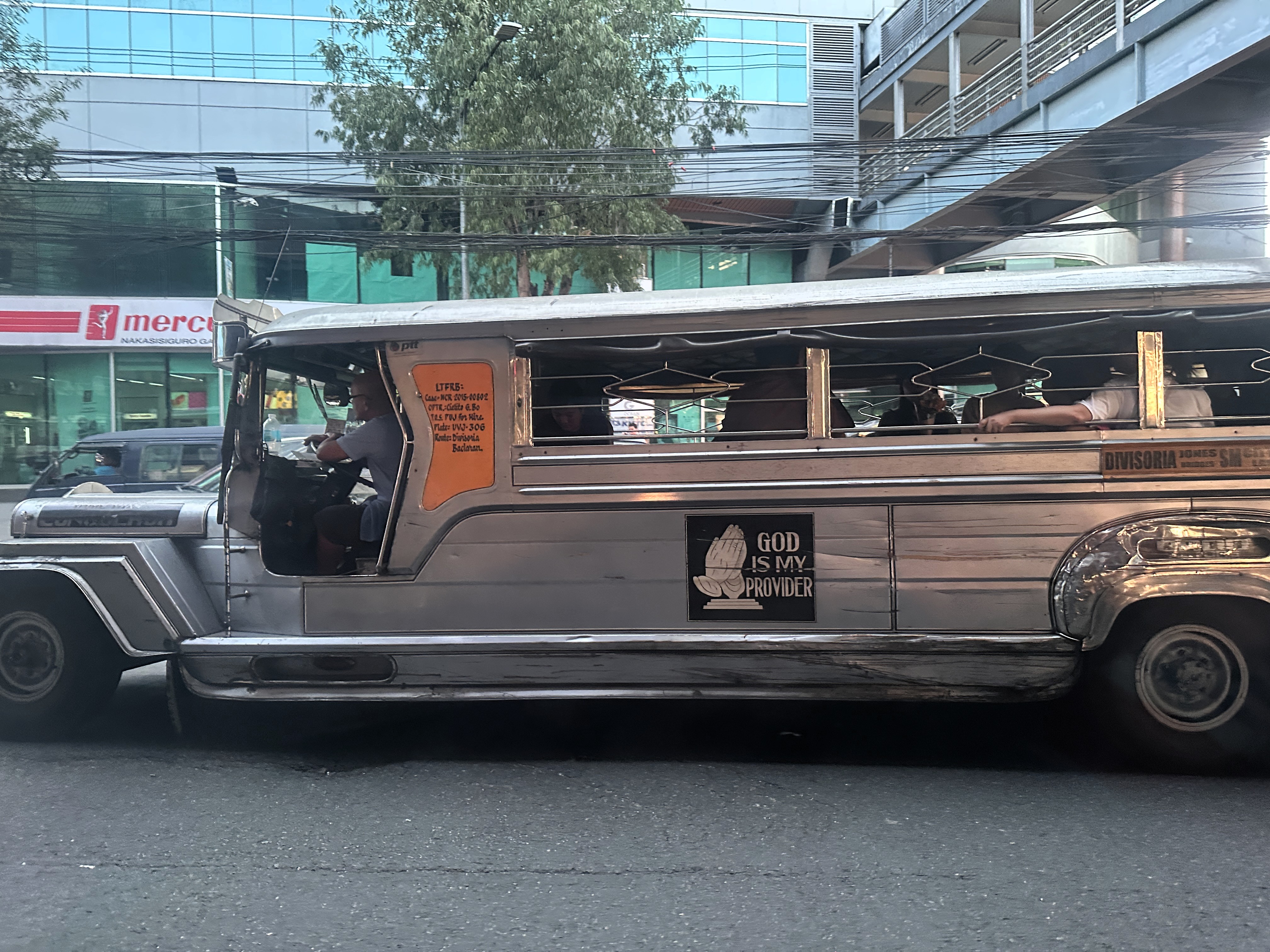
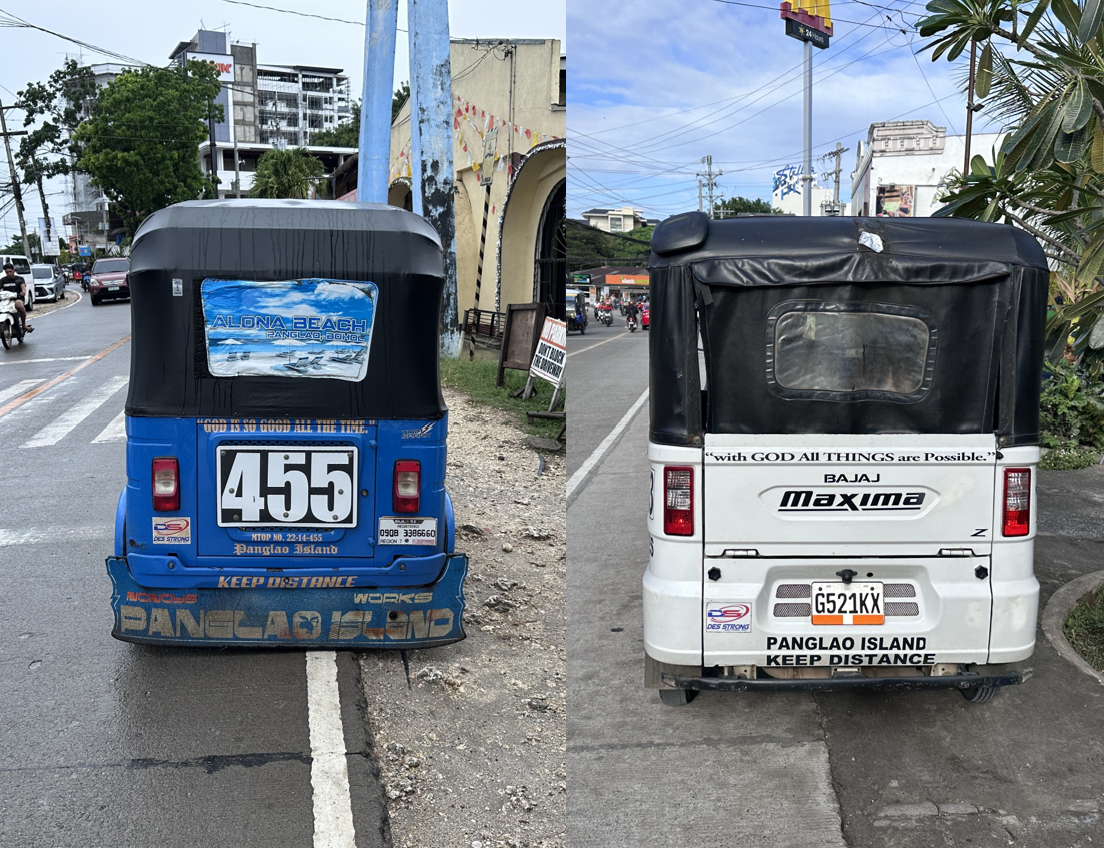
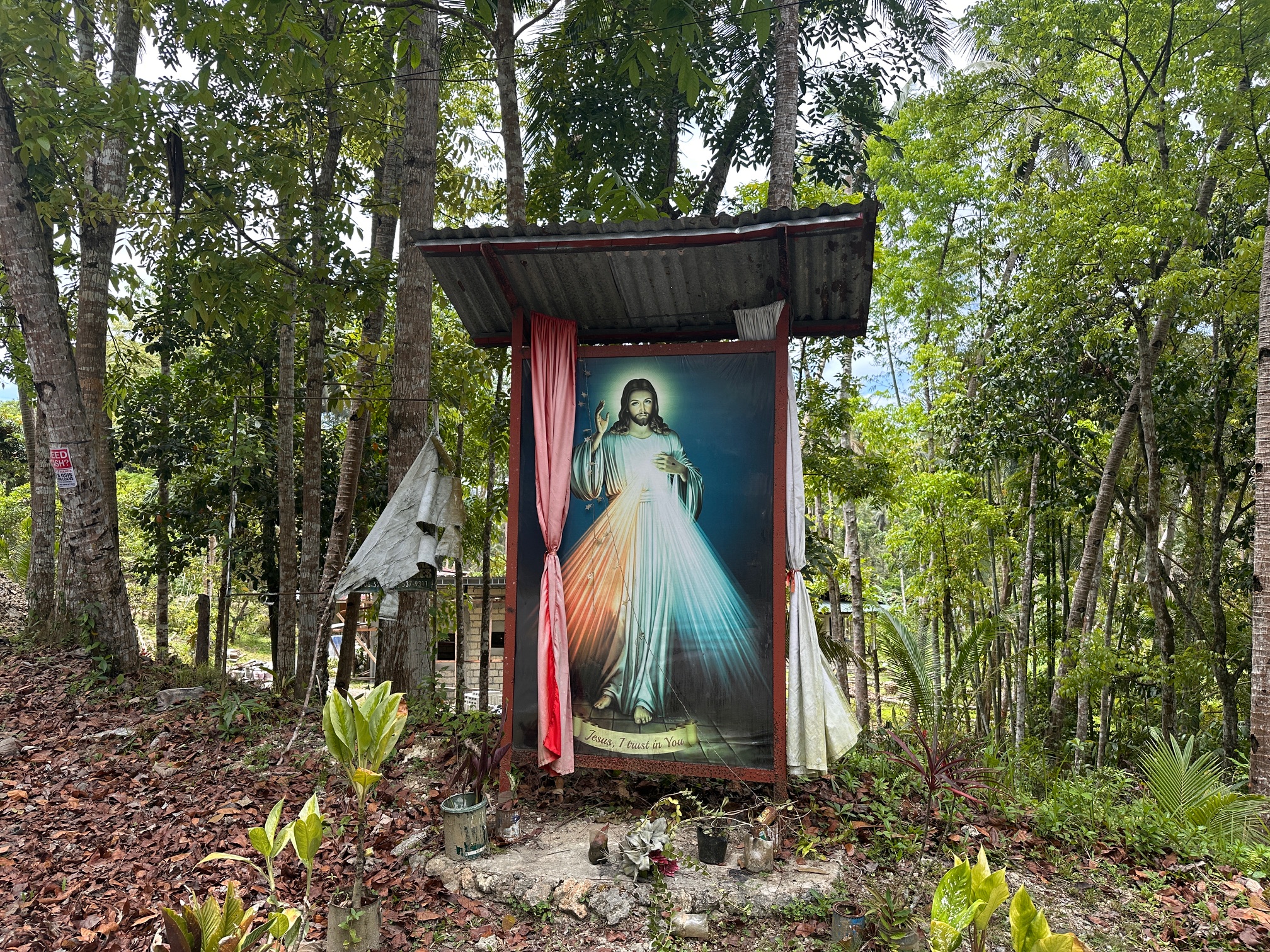
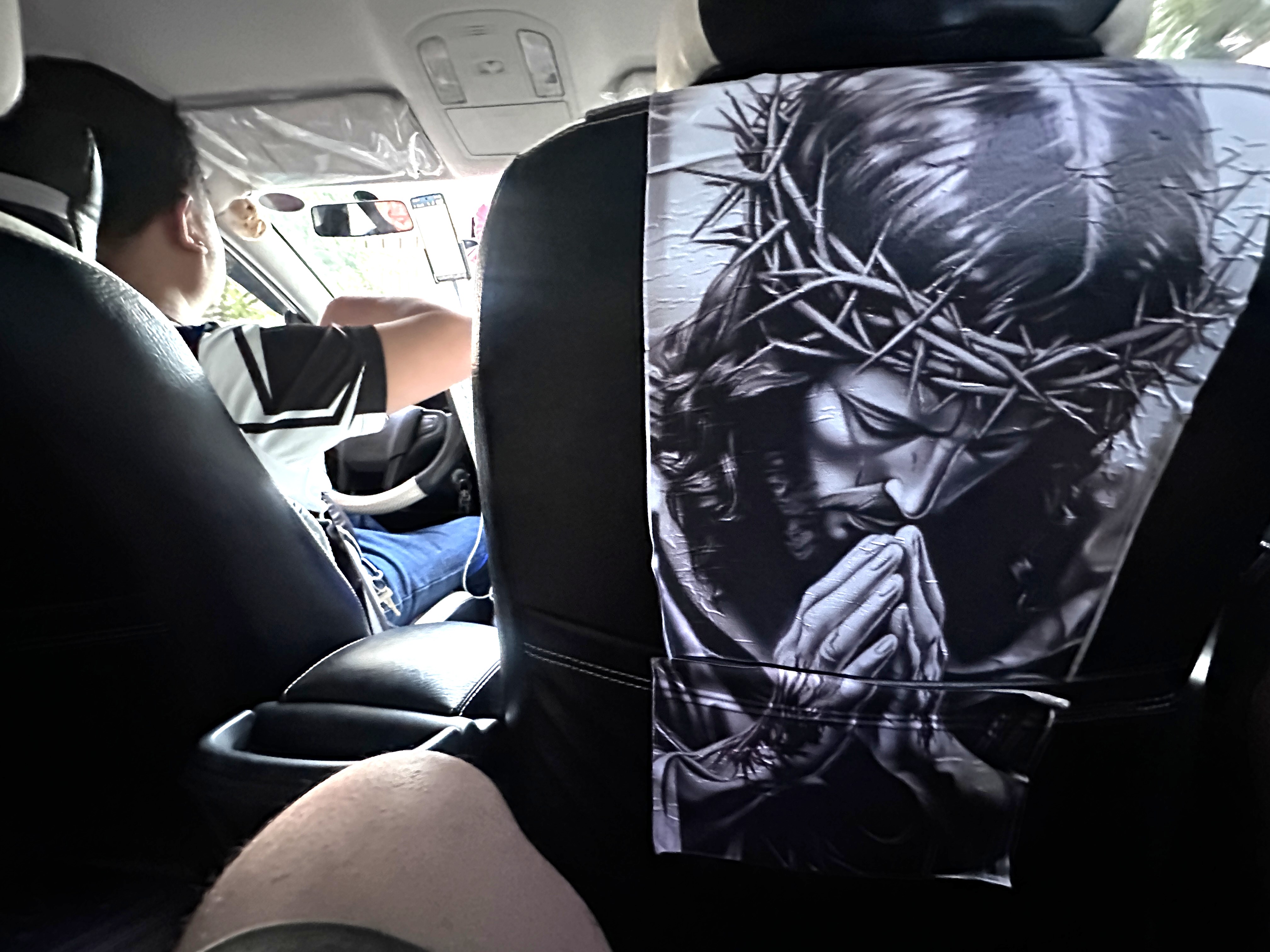
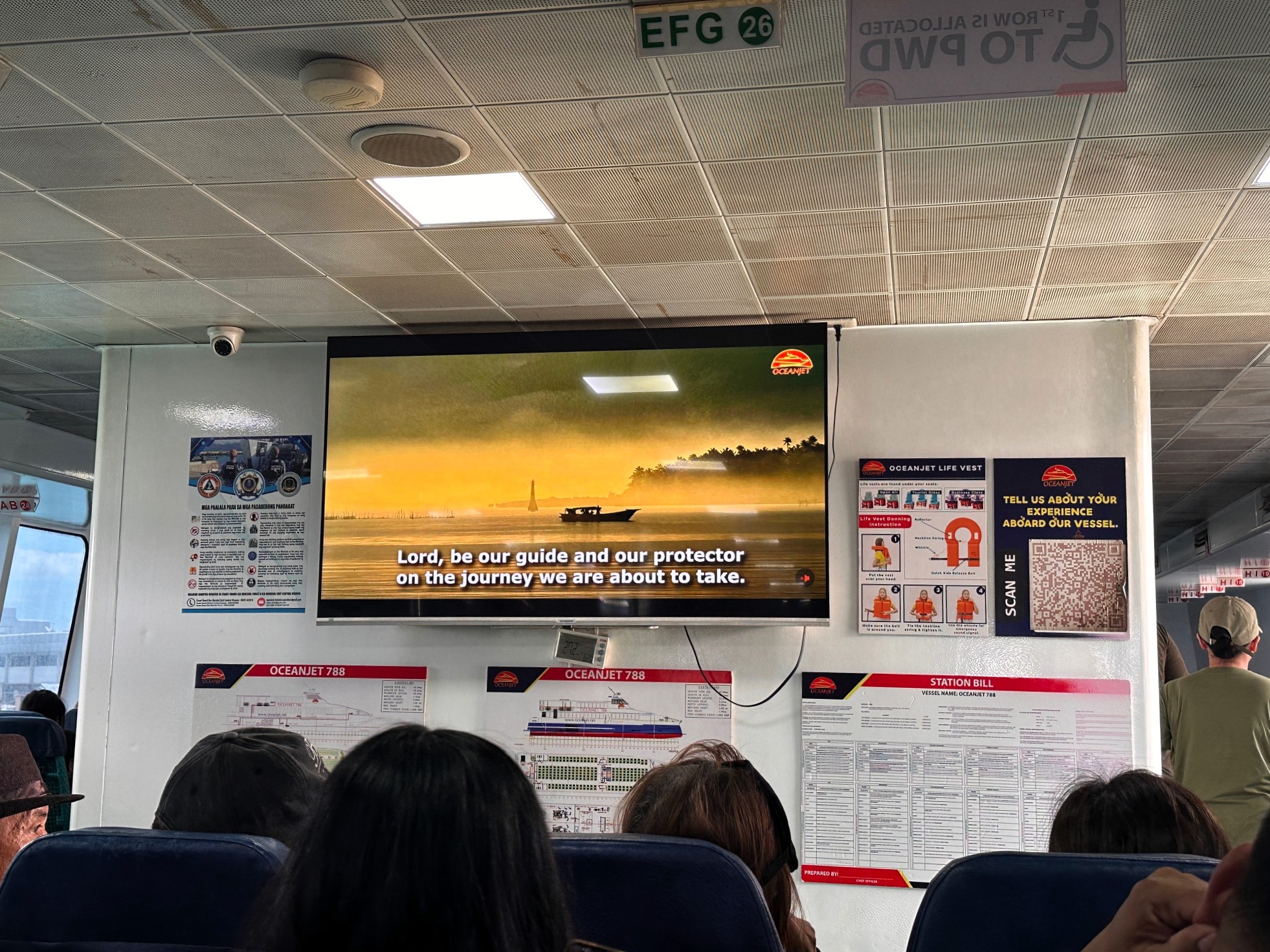
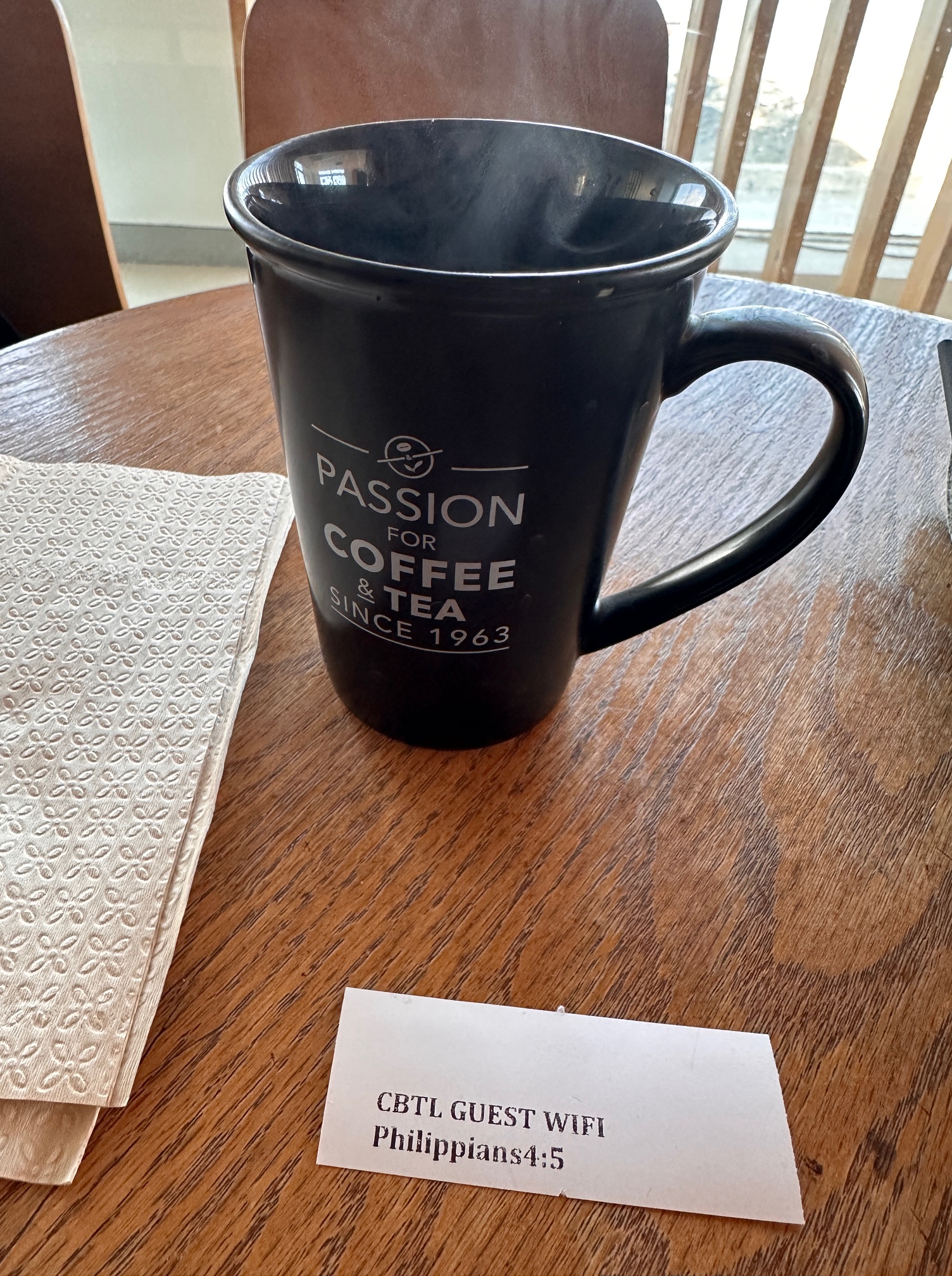
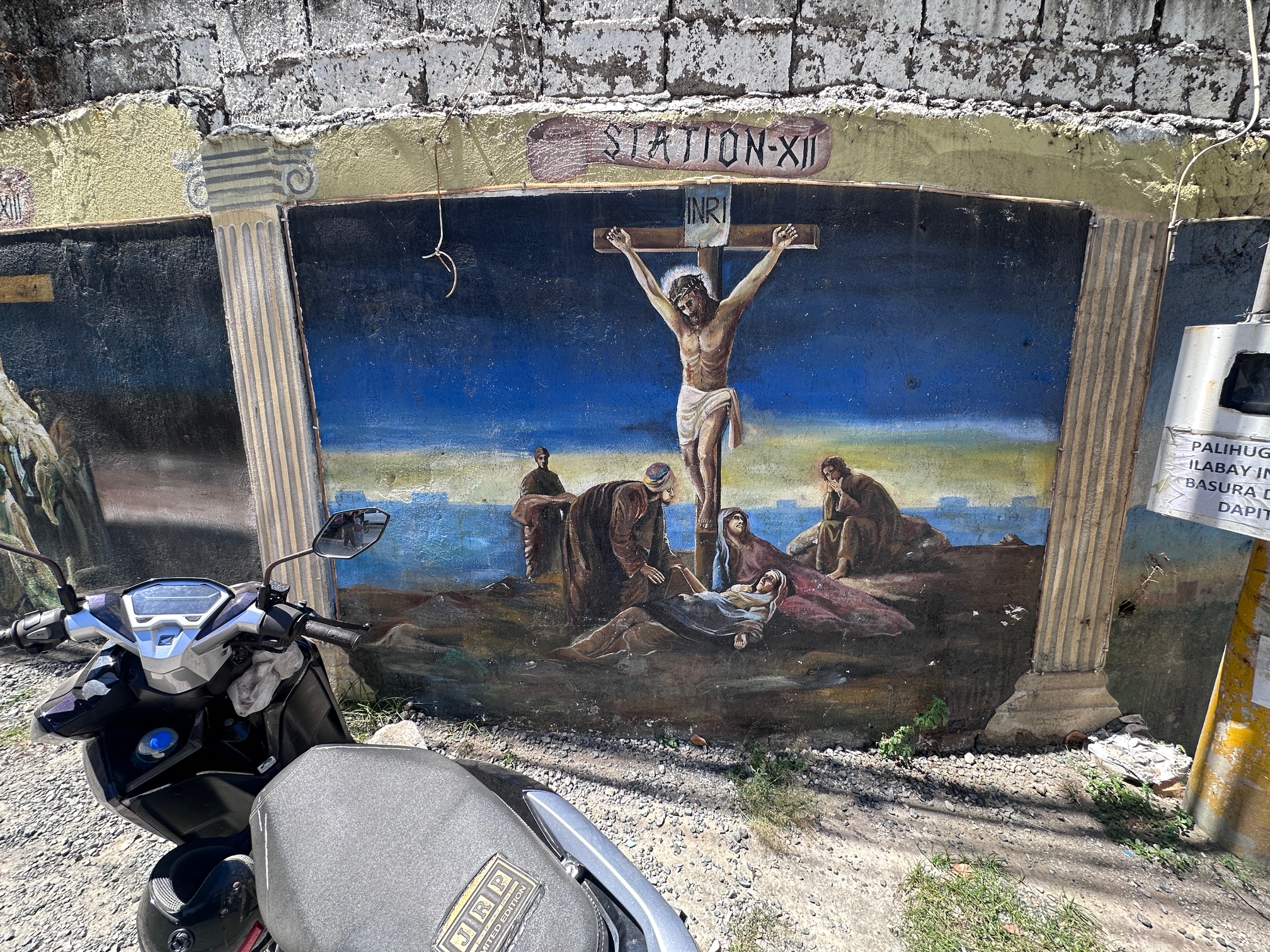
In few countries today are icons and symbols of Catholicism more prevalent than in the Philippines. It is not a theocracy; you are not forced to be Christian. Their presence is like advertising is to capitalism: even when you refuse to buy anything, there is something reassuring about it. The inexhaustible imagery appears wherever people go and in and on the vehicles they go in. Bible sayings lord over traffic intersections from electronic billboards and are printed on public buses and tuk-tuks. Taxi drivers place crucifixes and Jesus quotes in their car interiors. Sidewalk murals depict the twelve stages of the crucifixion. Posters of Christ are placed before turns on country roads to reassure drivers. There are chapels in shopping malls and shrines in ferry waiting halls, and a prayer video in your departing ferry. These are just a few examples of the ubiquity of religious advertising that I encountered on my three-week trip to the country. There are surely countless more in the most unlikely of places. I can’t imagine what the homes of the Christian pious look like, who constitute 90% of the population (Catholics 79%, Protestants 11%).
To be frank, my research domain, the Philippine massage establishment, turned up no crosses. But I love the idea of it: a crucifix, particularly one with a bleeding Christ, placed directly at the front of your massage table: always in your sight and watching over you. Perhaps a stained-glass window in the room suffusing sacred hues onto your flesh. And for the finishing touch: masseuses dressed in nuns’ habits. Now, of course, I can’t think of any sane massage venue that would do this. Oh, there must be some exceptions out there, a few silly proprietors who confuse business with their personal life or assume everyone’s faith is as all-consuming as their own. I wasn’t fortunate enough to discover any of these improbable cases, which I would have pounced upon like gold. At the same time, the rare exception would only prove the rule: the one place where you do not want to remind Catholics of their religious faith is in a massage booth. Even if the massage is strictly virtuous and therapeutic.
On the other hand, just because the idea of a crucifix hanging over a massage table is so improbable, so loopy and zany, it could be a genius business idea. To be sure, many, indeed most customers might flee in annoyance or disbelief as soon as they saw it. But the first thing they would do is to tell others about it. Curiosity about the shocking massage shop would drive these others there to see for themselves. And even if they too acted outraged and quickly left (after photographing the offensive crucifix), the word of mouth would soon become viral. Behold: long lines of customers, both male and female, who not only have no problem with Christ joining the massage, they are greatly turned on and excited. Dying of curiosity to see how they would be massaged. The media would discover it, then the police. And the business-savvy and increasingly prosperous proprietor would claim with a straight face that the crosses stand as a reminder to both masseuses and customers to keep the massage proper. The police would take her word for it and be satisfied.
MANILA
Makati City, Metro Manila. Well Being Nature Spa Massage. On my first full day in Manila, we park ourselves in a Single Origin, an elegant café chain. As I will discover, all “cafés” in the Philippines are actually restaurants, typically serving western food but also coffee in the afternoon, while dedicated coffeehouses are called “coffee roasters.” The coffee is excellent, as is the banana cream tart. While my wife gets to work on her digital paintings, I head over to what looks to be an upscale massage shop a few steps down the street. They’re booked up, and the clerk, a middle-aged woman, tells me to return in an hour. On the sofa in the small lobby is an elderly Caucasian man waiting for his massage. I arrange a sixty-minute Swedish massage, the standard term in the Philippines for a full-body oil massage, for 1,100₱ or about USD $17. This incredibly cheap price will turn out to be rather expensive by Philippines standards, as we’ll see.
Upon returning, it’s my turn to sit on the sofa while they get my room ready. Several masseuses in their thirties and forties, dressed like nurses in blue uniforms, pop in and out of the lobby. My masseuse, the oldest and least attractive, gruffly summons me to my massage room down the hallway. Note that when I mention massage workers’ appearance, it’s not that I’m after an attractive one; on the contrary, I prefer the older and plainer ones, for reasons I’ve long written about on the subject: they tend to be more at ease with men and deliver a better massage. The room is small, clean, and comfortable, with a curved wall and massage table placed at a gentle angle. New Age piano music. She opens a drawer below the massage table for depositing my clothes and leaves the room while I get undressed. Like Thailand but unlike most other East and Southeast Asian countries, disposable shorts are not provided, at least in this establishment, only a towel. Personally, I loathe having to wear shorts or underwear, so this is a good sign. I mount the table face down and cover my nakedness with the towel out of politeness.
The lady gives me a sturdy massage and does not shy away from my buttocks and inner thighs. I need more work in those areas, I tell her, and she gets closer into the groin and prostate. They have to be careful. One way they can gauge the customer’s tolerance in the erogenous zones is to graze the scrotum, though only after my own encouragement, when I ask for more finger pressure. After I turn over, she continues to work my adductor and pelvic-floor muscles, though beneath the towel, carefully keeping my supine midsection covered. The close work triggers a strong erection. She strokes it and squeezes it out with quiet, practiced efficiency, remaining expressionless the entire time. Things are getting off to a good start.
The Nuat Thai Foot & Body Massage is the largest massage chain in the Philippines. I would soon see their familiar blue sign in every neighborhood we passed through in every city on our trip. But I don’t know that yet when I happen upon one their shops a few minutes’ walk from our hotel in Makati City for my second massage. It’s around 8 PM and the lobby is crowded, two young Western couples and several youngish single Filipinas. The clientele don’t seem like they’ve come for anything fancy. It’s a more stripped-down place than the last, with correspondingly cheaper prices—750₱ for one hour of Swedish. The workers in this venue, also dressed in blue nurse uniforms, look younger, in their twenties. Despite all the customers ahead of me, I am soon served.
The masseuse who fetches me is chubby with short hair. The booths line one side of a long hallway behind a wall of curtained entrances. They seem to be doing good business, as outside of each booth is a pair of customers’ slippers. The girl instructs me to put my clothes in the small plastic basket and to keep my underwear on. There is just enough space between the side of the table and the curtain separating my booth from the one adjacent to squeeze between, but I am not able to move without jostling the curtain. As I struggle to undress discreetly, the masseuse’s butt in the next booth bumps up against mine. Massage factory, I think. The treatment itself is as perfunctory as if I were being massaged on an assembly line. And it’s proudly prudish: my request to have my inner thighs, buttocks, and stomach worked is met with a flat refusal.
The disappointing experience—one of my worst, most indifferent massages ever—has the benefit of bringing my expectations down to baseline. I say “benefit” because the quality of massage in every country is wide-ranging, and I’m not expecting the Philippines to be any different. What I am hoping is that the subsequent treatments I receive fall within this range to provide a variety of experiences. But I will not be going back to this chain.
ON CATHOLIC THEOCRACY
The Philippines has long had a complex relationship with Christianity since Ferdinand Magellan arrived in Cebu in 1521 and erected his famous cross, by that act imposing the Christian God on the new territory. If the locals had any doubts about the Spaniards’ intentions, let us revisit Antonio Pigafetta’s eyewitness account of the momentous event:
Then the captain [Magellan] began to speak to the king [of Cebu] through the interpreter, to initiate him into the faith of Jesus Christ, [saying] that he thanked God for having inspired him to become a Christian, and that he would vanquish his enemies more than before. And the king replied that he wished to be a Christian, but that some of his chief men would not obey him, saying that they were men as he was. Then our captain summoned all the chief men of the king, and told them that if they did not obey the king (as he himself did) he would have them all killed, and would give all their goods to the king. And they all replied that they would obey him….And from that time, before a week had passed, all those of this island, and of some others, were baptized. And we burned a village which refused to obey the king or us.
What is often forgotten is that the contract drawn up by King Charles I of Spain authorized Magellan only to discover the Spice Islands (present-day Maluku Islands in Indonesia), not to proselytize: “Gifts and commercial advantages were to be offered kings or chieftains…hostilities were to be avoided as being inimical to future trade….And under no circumstances was Magellan to leave the flagship or set foot ashore. Thus, all those mass baptisms in Cebu and heroics in Mactan were in direct disobedience to [the King’s] orders” (Scott). The over-zealous navigator indeed jumped the gun. He was killed days later when with only a few scores of troops he foolhardily took on several thousand-armed natives on the neighboring island of Mactan. Several other expeditions over the next two decades were also repelled. Not until 1565 did a well-armed Spanish force succeed establishing colonial rule. It was only after the fact that Catholicism was employed to discipline the population and institutionalize a regime that lasted until Spain was defeated in the Spanish-American war of 1899. Then following the declaration of Philippine independence, the Church disestablished, though it was to hardly go away.
In his novel Noli Me Tángere, renowned Filipino nationalist José Rizal (1861-96) vividly depicts the iron grip of Catholicism on Philippine society in the dying days of Spanish rule:
Bells announce the evening prayers. Upon hearing the religious tolling they all stop, leave off their activities, and remove their hats. The laborer coming from the fields stops chanting to the rhythmic gait of the carabao he is riding, and prays. Women cross themselves in the middle of the street and exaggerate the movement of their lips so no one will question their devotion. Men stop petting their fighting cocks and chant the Angelus, so luck will smile upon them. In their homes, people pray loudly. Any sound other than the Hail Mary fades away, and all is quiet.
An instance of the compulsory daily prayer appears in the movie Amigo (dir. Sayles, 2010), set during the U.S. invasion and occupation of the Philippines (1899-1902), which, incidentally, resulted in a conservative estimate of 200,000 Filipino civilians killed by scorched-earth campaigns, disease, and hunger.
Noli Me Tángere, which castigated the power of the Spanish clergy, caused quite a stir when it came out in 1887, one of the great historical examples of a mere novel firing the public imagination and catalyzing political change and upheaval. The population was seething under Spanish rule and welcomed articulate voices like Rizal’s. He traveled widely in Europe and other countries, networking among other revolutionaries. When rebellion broke out in the Philippines, he was deemed too incendiary a threat to remain alive, despite never being directly implicated in insurrectionary activity. He was arrested en route to Cuba from Spain, brought back to Manila and executed by firing squad.
It’s hard for us to wrap our heads around traditional Catholicism, what living under a theocracy was like, and a corrupt one at that. Consider indulgences: paying priests to get one off the hook for one’s sins. The Church long ago banned the outright selling of indulgences, in 1567 by Pope Pius V. But it took until the late nineteenth century to weed out the quantification of indulgences—the precise number of years spent in purgatory that could be reduced through so many prayers, alms, or good works. The Philippines was one of the last holdouts. The faithful continued to invent all sorts of tricks and schemes, including monetary payments, to lessen their time in purgatory, all with the full connivance of the clergy, deftly satirized in Rizal’s novel. When Brother Pedro boasts of the account book he uses to keep track of the number of souls he’s “pulled from the fire,” Sister Sipa counters she has a better method for multiplying indulgences:
“You all know full well that by reciting the ‘Blessed for your purity’ and the ‘My Lord Jesus Christ, the sweetest father of pleasure’ you get ten years [off purgatory] for each letter…”
“Twenty! No, less, five!” said several voices.
“One here, one there, doesn’t matter. Now, when a butler or maid breaks one of my plates, glasses, or cups, I make him pick up all the pieces, every one, no matter how small, and he has to recite the ‘Blessed for your purity’ and the ‘My Lord Jesus Christ, sweetest father of pleasure,’ and the indulgences I get I dedicate to the souls of the departed. Everyone knows about it in my house, except the cats.”
“But those indulgences are meant for the servants and not for you, Sister Sipa,” objected Rufa.
“And who is going to pay for my cups and plates then? The servants are happy to pay for them this way, and I am, too. I don’t beat them, just a little slap or a pinch.”
“But if the plate broke in two or three pieces, you don’t get very much,” the stubborn Rufa put in.
“Abá,” replied old Sipa, “I still make them pray, I put the pieces back together and we end up losing nothing.”
While funny and ridiculous, the comic scene would not have appeared all that improbable to the Catholic laity of the era. The idea that you had to earn your way into heaven by a repetitive number of acts or payments was fully operationalized in the Philippines, an all-embracing form of collective psychological terror believed by millions right up until the modern era.
PUERTO GALERA
South of Manila across the water from Batangas City is Puerto Galera on Mindoro Island, a popular scuba diving resort. We don’t go there for the diving but to check out the scenery—and the massage offerings in a different locale. The resort is on a peninsula small enough that its hills can be hiked in several hours. The scenery is indeed spectacular, with dramatic views in all directions of the Verde Island Passage. The diving resorts are concentrated along Sabang Beach. Where Sabang Road feeds into the beach, plentiful massage establishments await the crowds. There is also an adjoining lane with discos, pole-dancing bars, retiree pubs, and massage parlors of the shadier sort.
Large shops whose workers are managed top-down tend to stifle spontaneous interaction between individual masseuse and client. I prefer small shops with no boss or madam, just one or two masseuses who run the place themselves. As noted earlier, I also prefer older masseuses, past their prime and likely more eager to please. On our first day walking down Sabang Road toward the beach, we pass by a tattoo shop with several men and a middle-aged woman standing out in front. “Massage?” the woman calls out to me. She assumes I’m alone since I’m walking several paces ahead of my wife. You almost always have to walk in single file along Philippine streets, bulging as they are with vehicles and no sidewalks.
I return the next day. The massage shop is reached through a stairway in the back of the tattoo shop. We are now dealing with a more stripped-down sort of space, just a desk and two narrow massage tables with pull curtains. The woman is there, dressed in street clothes. An hour of Swedish is only 500₱. “Four Handed Massage” is listed for 1,000₱. That sounds enticing and I ask for it. She calls up her partner, who is still cleaning house and can get there in forty-five minutes. I decide to go for two hours and start with the one present and let the other join in when she arrives. Michelle watches as I get on the table naked with the towel. Only then does she draw the curtain so that I’m blocked from view in the event a customer should appear at the top of the stairs. From the first touch the massage is thorough and erotic. Her long, deep strokes start at my ankles and push all the way up to my balls. It takes an hour for Jhona to arrive. She’s also middle-aged but not bad looking. I can finally turn over. They hold up the towel to shield me from view as is standard practice, but then as many masseuses like to do, they adjust the towel again, lifting it up to cop a good glimpse of the forbidden portion of my body anyway.
Jhona also has a strong, firm and exciting touch, but as soon as she goes to work on my torso, Michelle disappears. After some minutes I ask where she went. She has a stomachache, Jhona says. Michelle returns after a bit and insists she’s fine. I ask them to do my legs, one on each leg. Michelle begins working my balls more deliberately and my cock expands. They have a frank style that I like. “I’m wet,” Jhona exclaims with a laugh. “I’m wet too,” says Michelle, but she reminds me they have to keep the towel on. Jhona has a nice ass and I fondle it. She pulls back coquettishly. “You should pay me 5,000₱ for that!” she teases. Michelle keeps glancing at the gap between the curtains and tries to draw them closer together. “Don’t tell anyone,” she whispers, as if anyone is listening. My cock has emerged from under the towel. “It’s beautiful,” Jhona says. Now she lets me squeeze her ass. I like their playfulness. But at this point it’s been two hours and I’ve had enough for the day. I’m also wary of how much money they’d really want if we escalated things. I toy with seeing them again. I add them to WhatsApp and tip them generously but not anywhere near what Jhona suggested.
The next day as my wife and I pass the tattoo shop Michelle and Jhona are sitting outside looking at their cellphones. Either they don’t notice me or pretend not to. I’m seriously interested but decide to forego another visit. If I were hanging out longer in Puerto Galera, I would probably be seeing them regularly—in my hotel or guesthouse. But this is after all a research project, and I need to sacrifice depth for breadth. We have a lot of traveling to do; it’s our last day here and there are a few more places I want to try.
Across the street from the tattoo shop is a massage parlor with a proper entrance but the same cheap prices. I bring my wife along. The two women assigned to us are young and attired in the usual blue uniforms. Behind the lobby is a back room with a dozen massage tables, all in view as the curtains separating them have been drawn up. It’s ten in the morning and we are the first customers. I’m worried it’s a massage factory. As feared, the massage is ordinary and while the girl’s stroking is competent, it’s rigorously polite. When a massage isn’t in the least erotic, solid technique can compensate for that, but she is quite diminutive and lacks strength and leverage. My wife is unsatisfied with her treatment for the same reason. Then again, at only $8 an hour, who can complain? The girl’s take is probably half that.
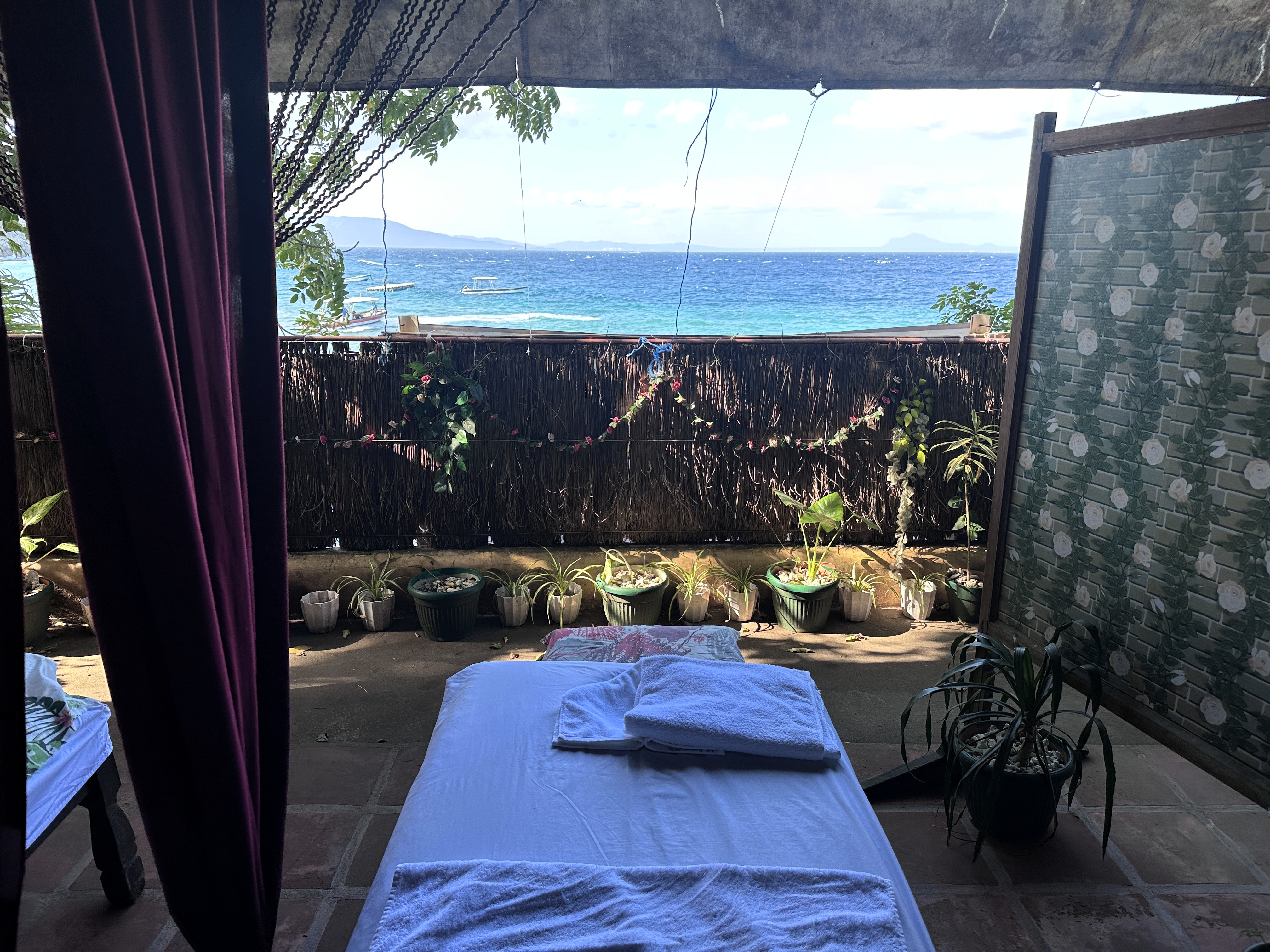
In the afternoon, along the waterfront, next to a raucous expat pub which the evening before had a live band churning out seventies’ hits (“I Shot the Sheriff”), I try the La Palm Spa, with Swedish massage pegged at 800₱, the convenient location, gobbling up drunken pub customers just steps away, justifying the higher than usual price. The pub is closed and all is very quiet, including the spa. It’s a small spa, without a lobby, just a wall one steps around to get inside. I see two massage tables separated by a curtain, and a bed on a raised platform at the far end hidden by another curtain, with a man on it, seemingly asleep. There are no curtains at the front of the massage tables; one looks out onto the sea (photo at top of this post). The priciest New Age spas anywhere could hardly beat this view. But you’ll find yourself, possibly naked, face to face with any customer who walks in—kind of exciting if you’re an exhibitionist, distinctly uncomfortable if you’re not. The problem at present, however, is that there is no masseuse.
I return an hour later and now there’s someone there. She looks to be around forty and attractive. Yet she greets me with an impassive, almost annoyed expression, as if I caught her in the middle of something. She tells me to get undressed and doesn’t request me to keep my underwear on (as the girl in the morning had). The immobile man is still there. She returns after a mysterious fifteen-minute absence. She is extremely particular with her draping, and it’s a workmanlike and disappointing massage. I suspect the man on the bed may be running the place and she has to keep things discreet. Or she’s just not really into her work.
Returning to Manila to catch a flight to Cebu City the next day, I receive a message on WhatsApp:
Michelle: Hello sir good day…How are you sir
Me: Hi. Sorry, I was too busy! We left Puerto Galera today. Going to Cebu.
Michelle: Oh really? That’s nice…please enjoy
Me: Thanks for the great massage. I’ll recommend you to anyone I know who’s visiting PG.
Michelle: Oh i appreciate that sir
CATHOLICISM TODAY
I’m of Protestant heritage, but so disinterested in religion were both my mother and I that for some reason I had long been under the impression our ancestors were Methodist, when in fact they were Presbyterian (my biological father had split the scene when I was four and I hardly knew him). My first exposure to Catholicism occurred when my mother and her girlfriend moved us to South Bend, Indiana, to attend graduate school at the University of Notre Dame. As the public grade school two blocks away was ninety percent Black, my mother sent me to the Catholic school downtown (this was the sixties). When I showed up to my first day of class, the homeroom nun asked me what I was doing there, before grudgingly letting me in. I attended Mass with the other students and found it curious and interesting, though I’ve never, then or now, understood religious faith.
That year my mom’s fling with lesbianism went out the window when an ex-Jesuit priest at the university seminary, P. Joseph Cahill, pursued her aggressively. As my mother related to me years later, he had recently been expelled or excommunicated for drunk-driving the wrong way down an expressway and getting a student pregnant—some sort of desperate self-sabotaging of his calling. But she needed a man. They married and we moved to Canada. A Rudolph Bultmann scholar (the famous German theologian), Joe had landed a university professorship in Religious Studies at the University of Alberta. He never foisted religion onto me; he was half-atheist himself by this point. However, he turned out to be a domestic tyrant. A decade later, when the marriage fell apart and he gave my mother a nervous breakdown, he had me arrested on false charges. He published a book (Mended Speech: The Crisis of Religious Studies and Theology) and continued to get into trouble, suing the university over perceived wrongs and lost. I go into more detail in my autobiographical novel, Lust & Philosophy.
To jump ahead. While doing a PhD at the University of Illinois of Chicago, I met a Filipina poet in our department’s creative writing program, Luisa Aguilar Cariño. She was in her early thirties, intellectual and attractive, with Chinese eyes and the rich brown skin of her ethnicity. After tentatively checking each other out, we made a date. “I’m in your hands,” she said with a smile when I picked her up at school that day, dressed in a loose white dress shirt untucked over her jeans. After dinner I brought her over. We sat on my futon and relaxed into each other. She told me more about herself. A devout Catholic, she had been married for fourteen years, with a husband and three daughters back in the Philippines. They did not approve of her independent life, abandoning the family for an indefinite stay in the U.S. She rebelled as only a poet could have. The previous year she agreed to pose nude for her roommate’s boyfriend, a photography student, and sent the prints to her family. When she went back home the following summer, they were even more outraged than she had expected. I was wholly impressed by her radical act. Luisa stayed in the U.S., eventually remarrying and taking her husband’s name, Igloria. She went on to become Poet Laureate of Virginia, 2020-22. That was the first person I met from the Philippines—over three decades ago.
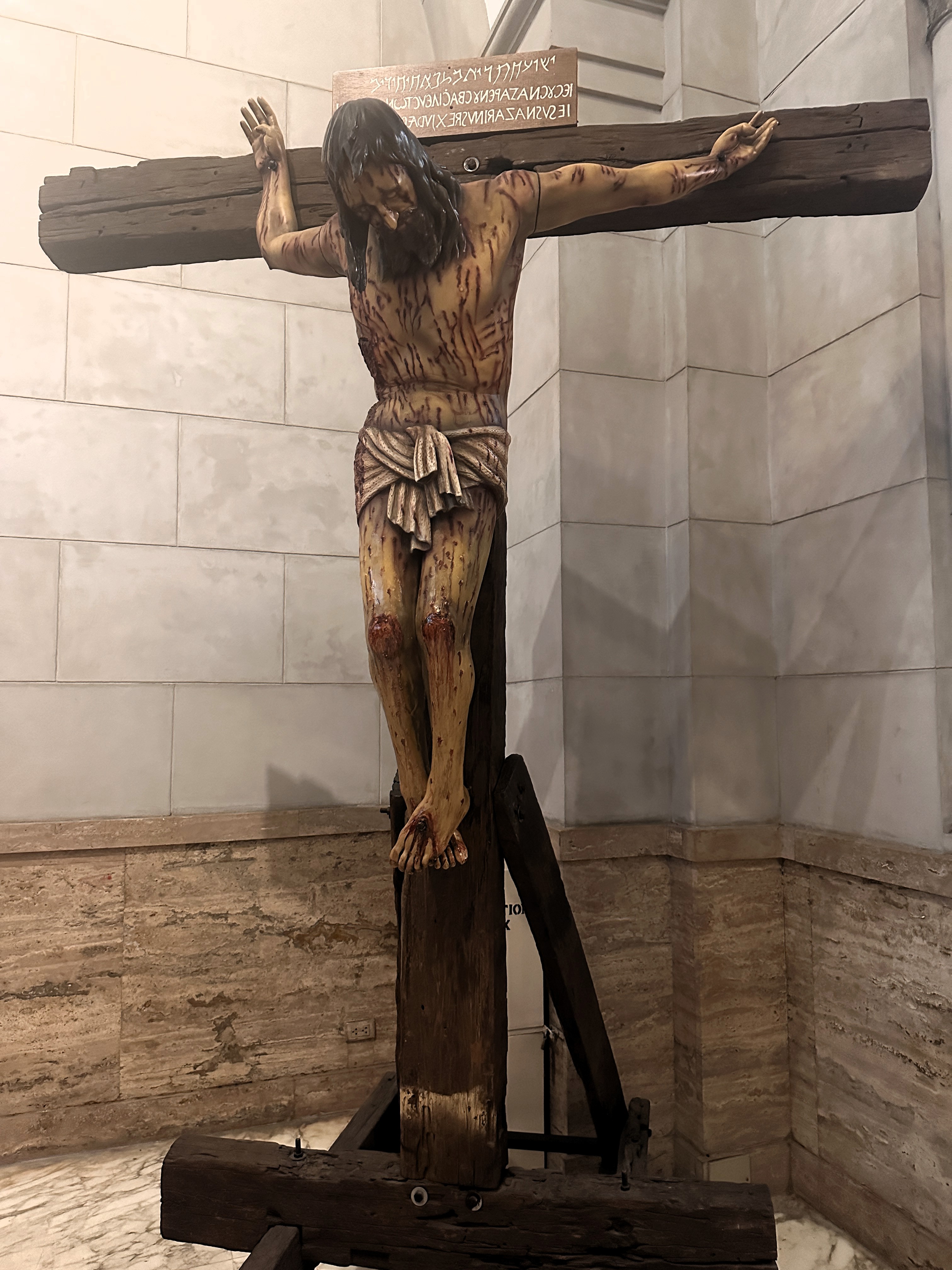
The Church today remains a fundamental, all-embracing institution and container of national identity. Rather than merely being a major influence on society, it could be said to constitute Philippine reality itself. So omnipresent and normalized is the Church that it forms a cultural matrix largely invisible from within. It’s simply taken for granted. I wonder how many Filipinos actually notice the promiscuous biblical iconography all around them. The Church comes to the fore during national emergencies, such as when Ferdinand Marcos declared martial law in 1972. Catholic leaders were split, some supporting the dictatorship, many others, and most of the laity, condemning it. They found refuge in the proto-socialist “public theology” movement, modelled after the Latin American liberation theology movements. The Church was instrumental in marshaling support for Corazon Aquino’s People’s Power Revolution in 1986, which succeeded in deposing Marcos.
The election of Rodrigo Duterte to the presidency in 2016 exacerbated relations with the Church, oddly so since he billed himself a populist, though he was better described as a Trump-style demagogue and vulgar braggart. (I write this the day after Trump himself bizarrely called the Pope “weak on crime” and “terrible for foreign policy”.) Driving a wedge between the Church and the people, he lambasted the clergy as “hypocritical” and the Pope as the “son of a whore”: “These bishops that you guys have, kill them” (Cornelio). Duterte currently sits in a jail cell in The Hague, awaiting the outcome of the International Criminal Court’s investigation into his extrajudicial murders of some 30,000 suspected drug dealers in his war on drugs.
CEBU CITY
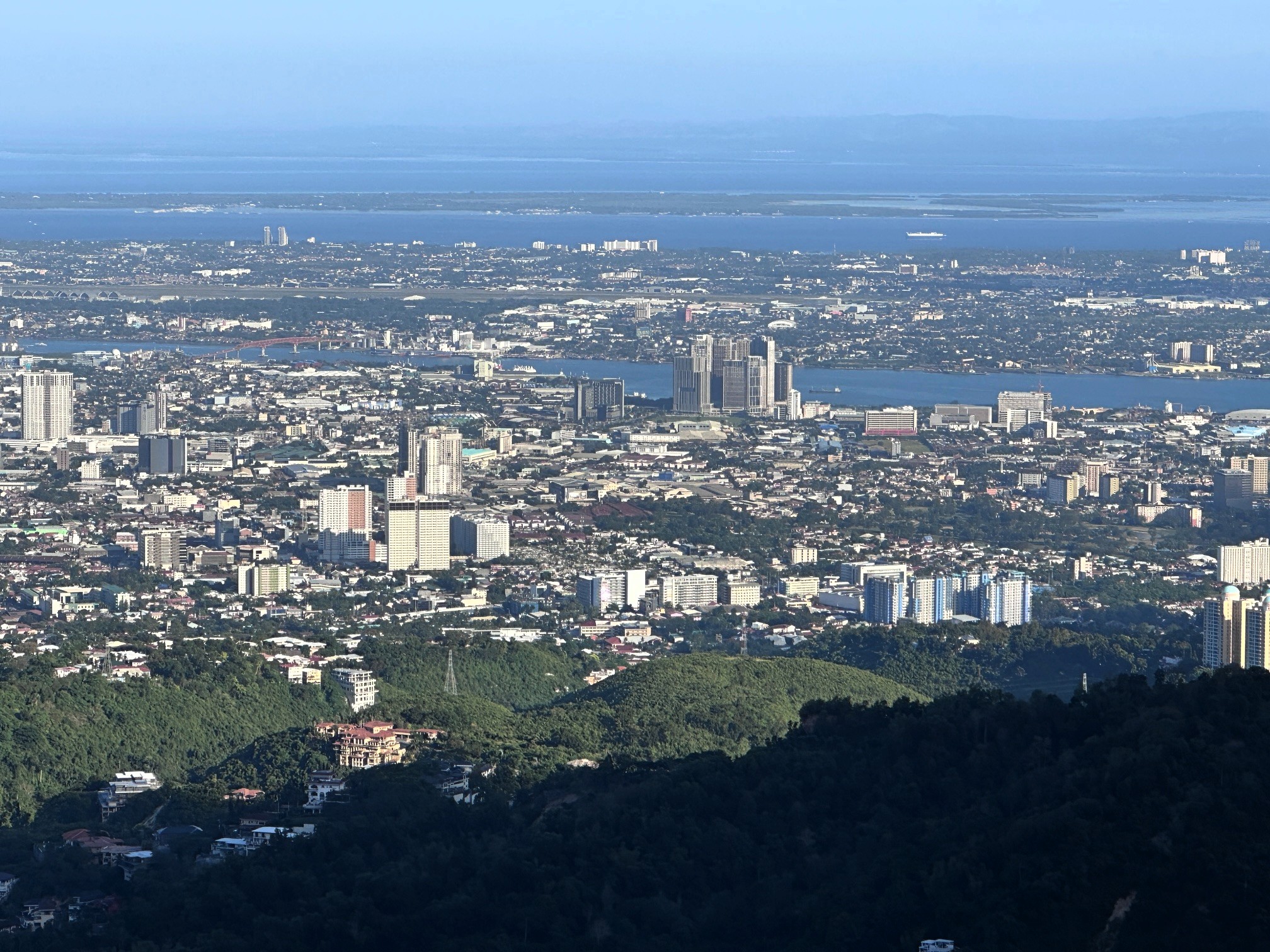
There is a magnificent view of Cebu from the “Tops” of the mountain overlooking the city, with the small island of Mactan where Magellan was killed in the near distance, and the much larger Bohol Island just visible across the Cebu Strait, where we will be headed on the ferry in a few days. A closer view of the city reveals a sea of corrugated-iron and plywood shanties. The only “islands” of public leisure are shopping centers, the largest being IT Park—several square blocks of upscale malls, restaurants, and cafés. Outside these islands, the streets are shabby, barely walkable, and allegedly unsafe. We did a fair amount of walking without incident, but you’re expected to get around by taxi.
Maria Luisa Massage and Spa in IT Park looks decent on the outside but is threadbare on the inside. The madam tries to persuade me to go for the ninety-minute “hot-stone” massage deal they have for 600₱, but I opt for a sixty-minute Swedish for 400. My shoes are exchanged for slippers on a shelf in the tiny lobby. Their bathroom is filthy, the floor puddled with water. The massage booth is so dark I have to feel around with my hands while undressing; thin vertical bamboo poles affixed together form its flimsy walls. In lieu of a massage table is a thin futon on the hard floor. It’s too short and my feet overhang uncomfortably on the floor’s surface as I lie prone and naked.
It’s too dark to make out the masseuse’s appearance when she enters. She has no compunction about getting right in between my inner thighs and prostate, and I have her work the area thoroughly. But she splashes on too much oil and my flesh is too slippery to gain much traction—a common issue with unskilled masseuses. When I turn over, she shields me with the towel, only to lift it off my groin and go to work on my cock. Well, now that niceties are over with, I fondle her breasts. She warns me, finger on mouth, not to make any noise as she unbuttons and takes them out, lying down next to me so I can suckle them. I think she’d be willing to go all the way if I pushed it. My eyes have adjusted enough to see her better. In her thirties and fat. We chat a bit. She’s from Mindanao. I suspect she’s Muslim but I don’t pry. She concludes the hour with a head and neck massage. I give her a generous tip. As I leave, she’s sitting outside the booth and I get a better look at her—friendly eyes and a nice smile.
PANGLAO, BOHOL PROVINCE
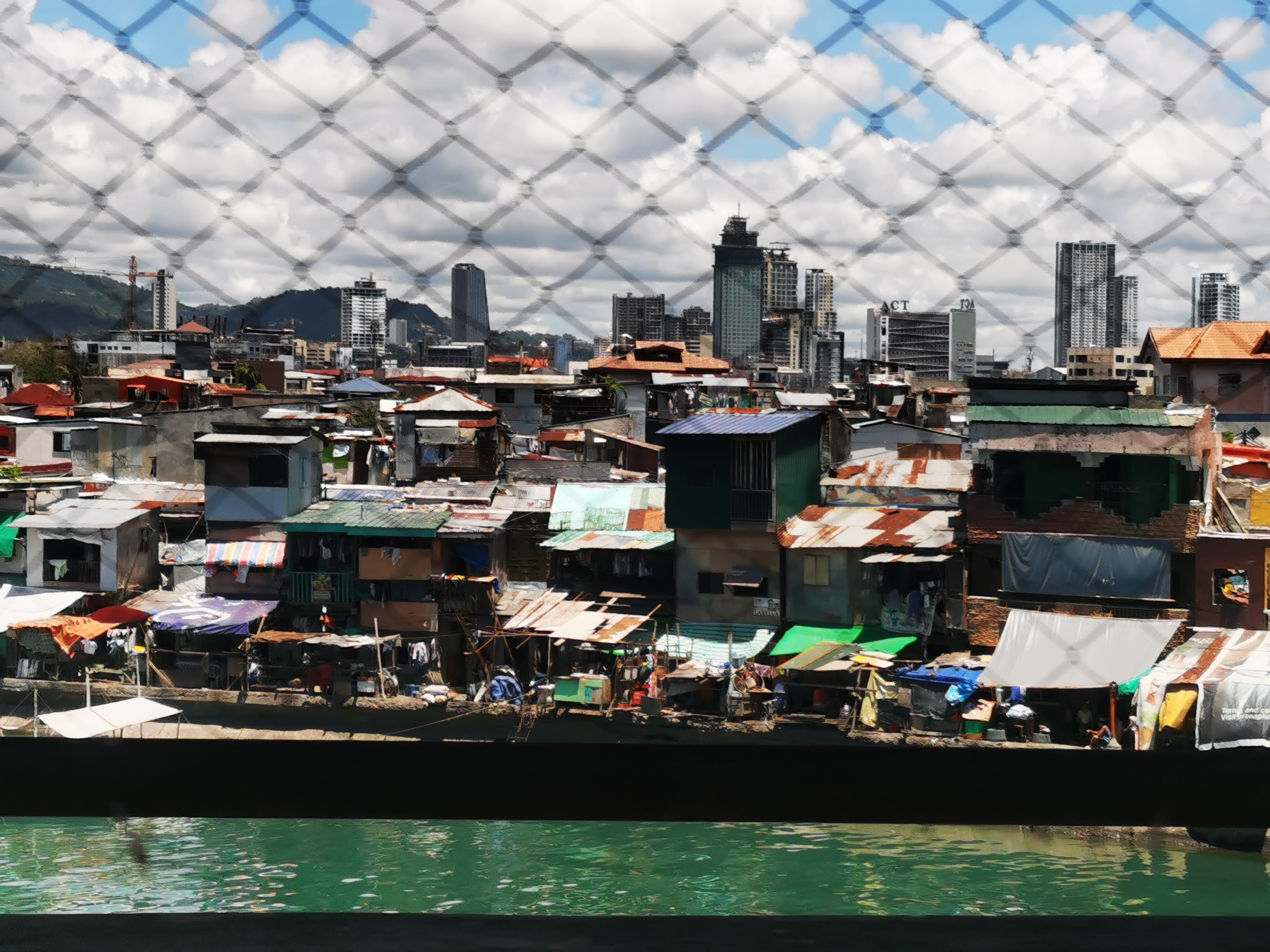
Panglao is a tiny island just off the southwest tip of Bohol, about the size of Mactan Island off Cebu City. Both have beaches but Panglao’s is more developed, one of the most popular resorts in the country. The kilometer-long Alona beach is lined with reggae pubs, patio restaurants with fine wines, and even makeshift outdoor massage stations, with a row of foreigners getting palpated over their clothes. The only thing distinguishing the place from your average Thai beach is the lack of weed. If the Philippines can be as liberal as Thailand toward its transgender population, it can equally get off its high horse regarding cannabis. It would turbocharge its tourist industry.
The first night as we return to our hotel, we pass by a massage venue named after the beach. Two women are out front with a menu soliciting customers. 700₱ for a Swedish. Quite randomly, I decide to check it out while my wife continues on to the hotel; massage shops are so numerous in Panglao that one is paralyzed by choice. In the lobby, I ask the attractive clerk for a masseuse who’s not too young. “Not too young, not too old,” she mocks in singsong. Is it a common request? The two girls have followed me into the shop and point awkwardly point to each other. The less attractive one assents. She leads me to the second floor, reached by an outside stairway. It’s a spacious, fully equipped massage room with bathroom and shower and two massage tables, a repurposed hotel room. She tells me to undress down to my underwear. I’m really not comfortable wearing clothing while being massaged, I protest, and she relents. The massage is perfunctory and chaste, though her draping is curiously lax, and my testicles are fully exposed to view while she does my legs.
An unsatisfying massage leaves one with an intolerably incomplete feeling, and I arrange room service in our hotel room the next morning, also for 700₱. The woman is attractive and full-figured but primly professional in appearance, dressed in a blue uniform. She asks if I want “Hard, medium, or soft” pressure. Hard, I tell her, especially on the inner thighs and buttocks. She’s actually quite good, zeroing in close to the groin though not enough to get me aroused. She’s also very particular about draping. Still, I tip her well, and I’m impressed enough to recommend her to my wife, who is also happy with her treatment.
EARLY CHINESE IMMIGRATION
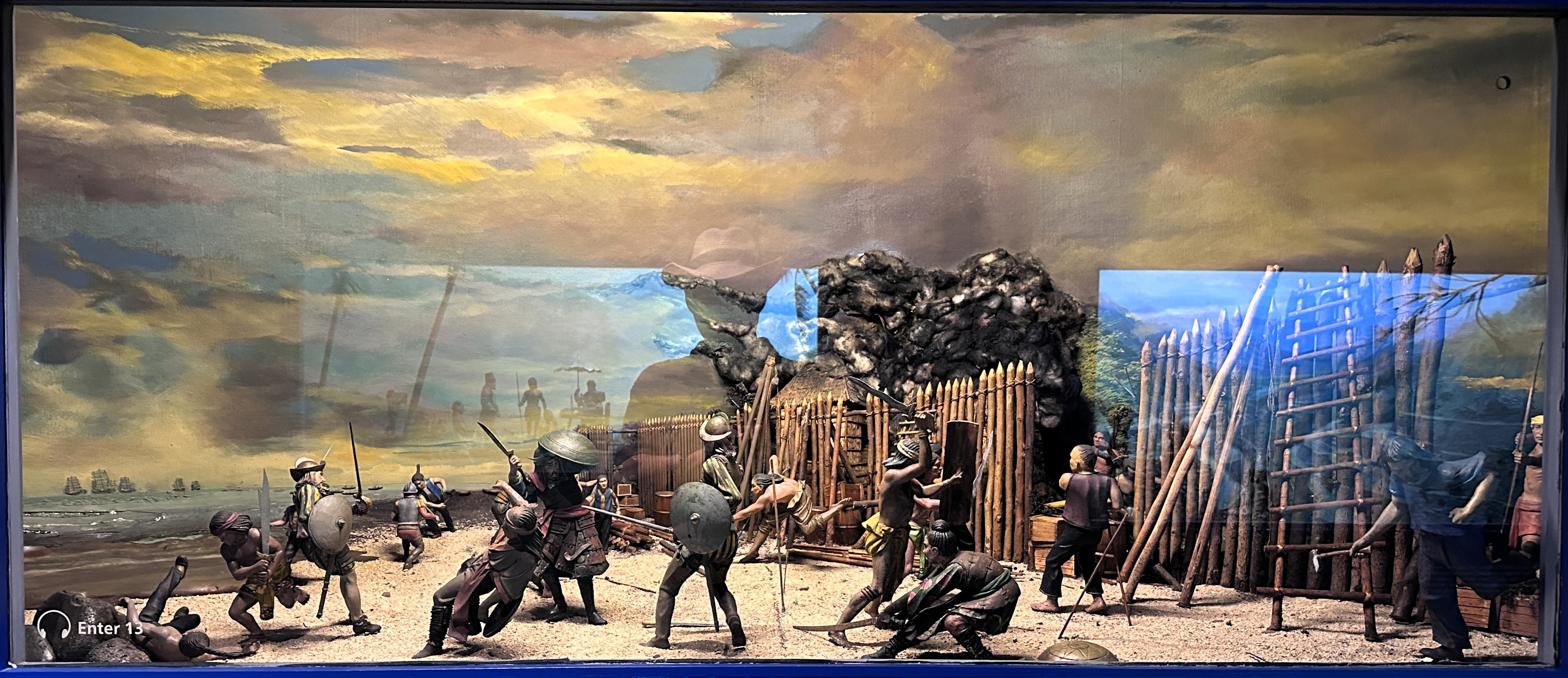
Besides the Spanish, the other major contender in the Philippines over the centuries were the Chinese, even though Filipinos have been mixed with Chinese blood long before either nation had a name, going back to the Neolithic era before the sea submerged the land bridge connecting the two territories. The earliest documented Chinese contact was in 982, traders from Guangdong and Fujian. Relations with the Spanish got off to a bad start soon after colonization, when the Chinese pirate Lin Feng (aka. Limahong) assaulted Manila in 1574 with sixty-armed junks and 3,000 men, wiping out a Spanish contingent guarding the Intramuros fortifications. The conquistador Juan de Salcedo rallied the Spanish to drive out Lin Feng’s forces over the succeeding months.
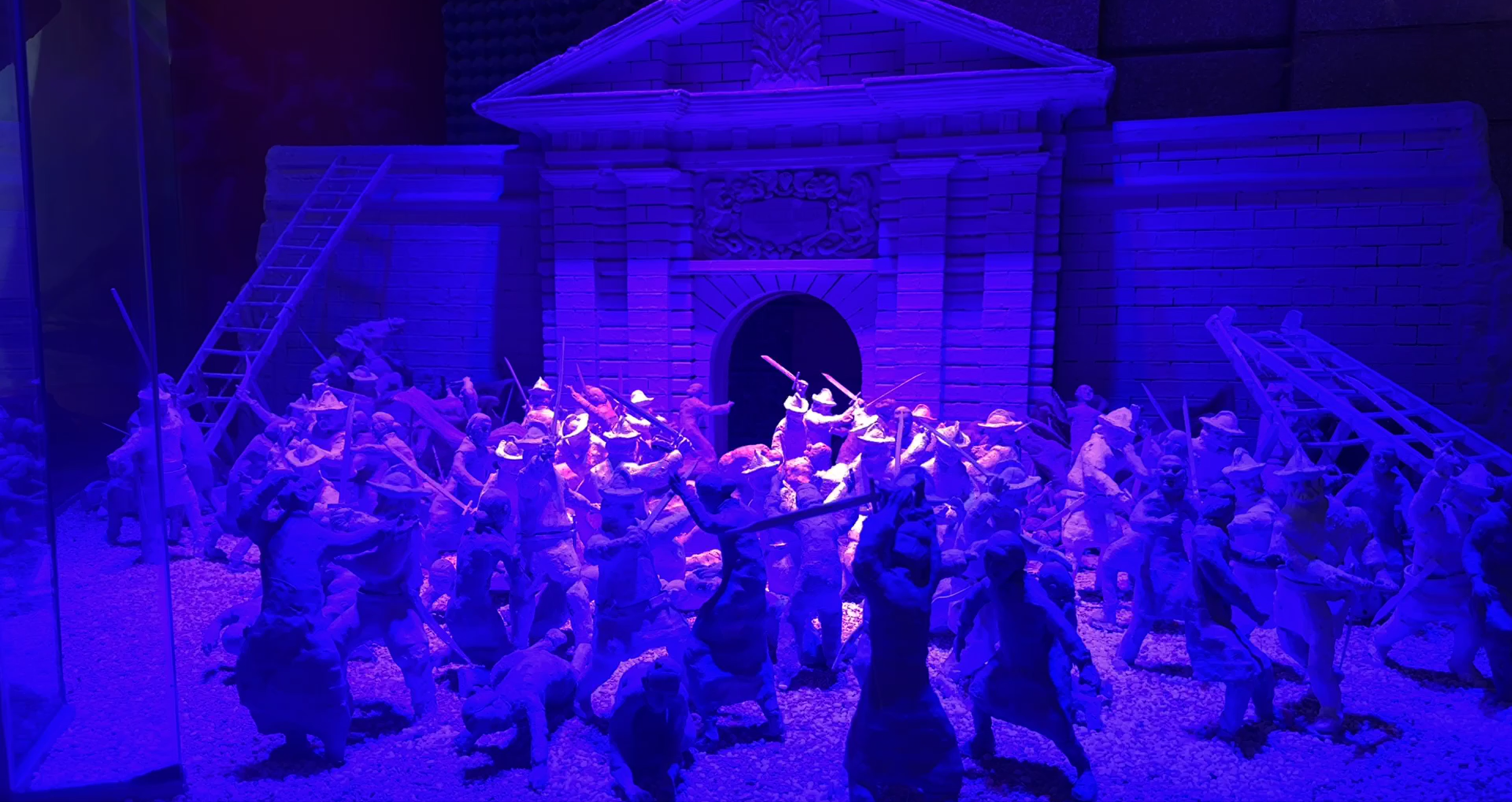
Souring on and suspicious of the immigrants, the Spanish in 1582 forced all Chinese living in Manila into a swampy ghetto outside the city walls known as the Parian and began exacting exorbitant and discriminatory taxes. When the Chinese revolted in 1603, the Spanish massacred all 20,000 of them and burned the Parian to the ground. They were replenished by a new wave of immigrants out of impoverished Fujian Province. But a pattern took hold. The terrible ghetto conditions again forced the Chinese to revolt in 1639. This time they slaughtered only 25,000 out of the 30,000 living in the new Parian. The Spanish relied heavily on the Chinese for skilled labor—merchants, artisans, carpenters, masons, tanners, book printers, bakers, laundry workers—and had to leave enough survivors to carry on essential occupations. Another 55,000 Chinese would be massacred in subsequent revolts. Eventually the Spanish grew weary of killing the Chinese and the violence petered out, enabling the immigrant population to climb from 60,000 in the mid-eighteenth century to 240,000 by the nineteenth century (Bahay Tsinoy Museum of Chinese in Philippine Life).
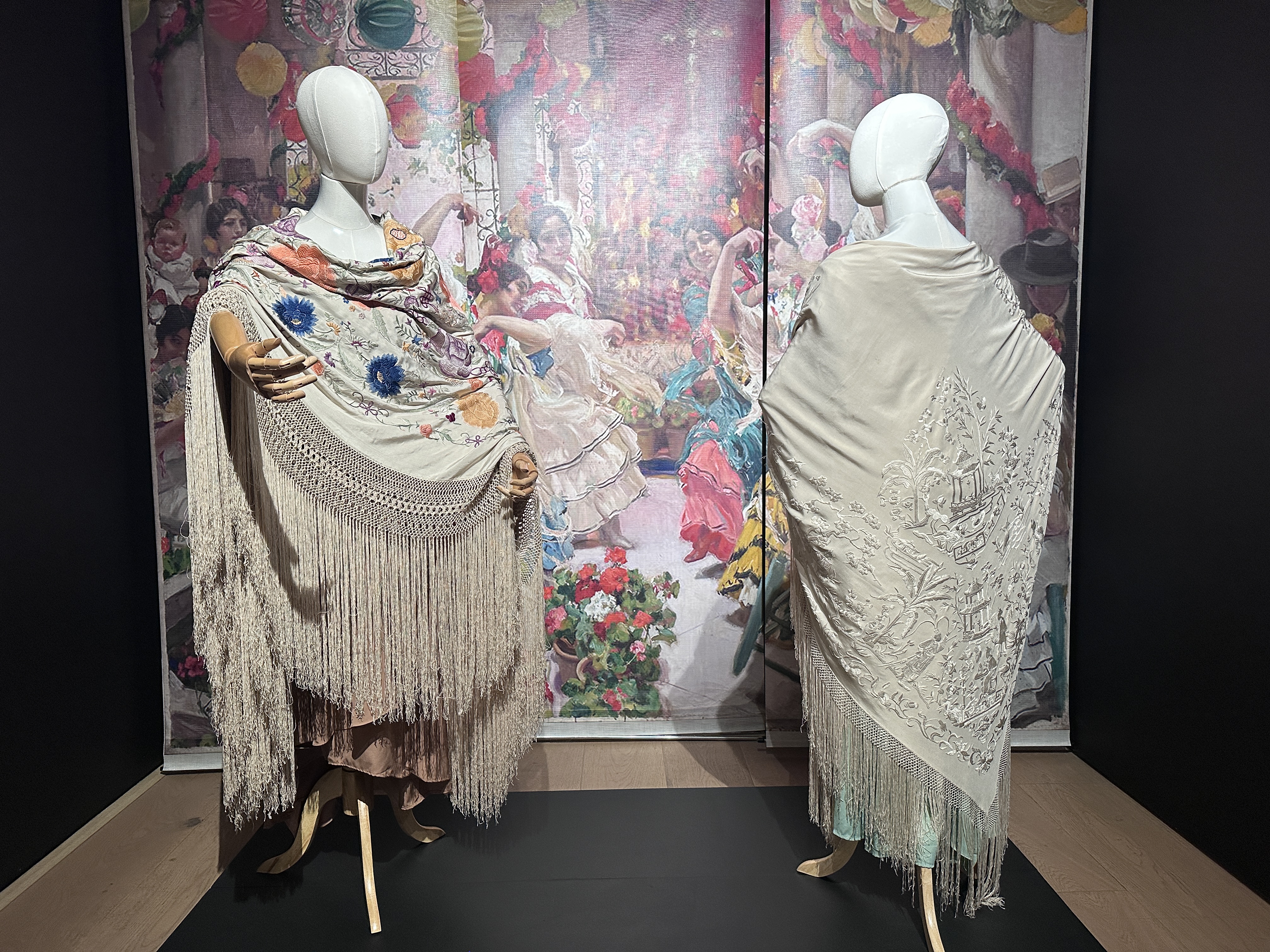
The Spanish gave the Chinese a way out if they converted to Catholicism and married local Filipinas. Converted Chinese were allowed to leave the ghetto. Domesticated families were deemed a safer bet than thousands of restive male immigrants packed into close quarters. An ulterior purpose was to set up Catholic missions in China and eventually secure a trading port on a par with Portuguese Macao. In the meantime, the China-Manila galleon trade was flourishing: silver from Acapulco, Mexico, carried on Spanish ships to China via Manila, importing in return prized Chinese products (the silver in turn paying for opium in China; the outflow of silver from China was one of the factors that led to the Opium War). The Manila shawl, for example, exquisitely embroidered in Canton, soon became one of the most coveted of fashion items—worn by Spanish gypsies and European ladies alike. The Chinese continued, however, to suffer discrimination (Lim-Lopez).
To return to Noli Me Tángere, José Rizal depicts in the novel a comic graveyard dialogue reminiscent of the one in Hamlet. A gravedigger defends dishonoring the corpse of protagonist Crisóstomo Ibarra’s murdered father after digging it up and dumping it into a nearby marsh: “‘Now don’t get angry, sir,’ he answered, pale and trembling, ‘I didn’t bury him with the Chinese. Better to drown than to be with the Chinese, I always say. I threw the deceased in the water.’” The scene is satiric. Rizal himself was of mestizo origin; his father’s family line traced back to an immigrant from Fujian, China, in 1697. In fact, many leading figures in the Philippine Revolution were Filipino-Chinese mestizos. After the American takeover, in 1902, the U.S. Government extended the Chinese Exclusion Act, which since 1882 had barred Chinese immigration to the United States, to the Philippines. This was repealed in 1943, but one third of the country’s half million ethnic Chinese, including mestizos born of Filipino mothers (but not Filipino fathers), remained resident aliens until 1975, when the government finally granted all ethnic Chinese born in the Philippines full citizenship (Ang-See).
DUMAGUETE CITY
A ferry ride two hours south of Bohol took us to Dumaguete City in Negros Oriental Province. Though it’s a seaside city with a pleasant promenade, there are no beaches and it’s not a tourist magnet. But it does have a lively foreign retiree scene and impressive restaurants and cafés. Try out the Casablanca and Esturya restaurants and the Sans Rival Bistro, Cakes & Pastries—if you’re planning on retiring there. There is also a respectable institution of higher education, Silliman University. And that’s about it. Around the outside of the St. Catherine of Alexandria Cathedral, built in 1776, they’ve wrapped photo montages taken from movies of the twelve stages of the crucifixion. It’s otherwise a rough-looking, grimy city, and the massage establishments reflect that.
A block inland from the facade of retiree restaurants along Rizal Boulevard (named after the author we’ve been citing) is Lotus Massage, on the second floor of a printing shop, reached by a narrow stairway. It’s so dark in the lobby I can barely make out the face at the counter. Swedish is only 350₱. I’m led to a room with two massage tables separated by a transparent black curtain, lit by a dim floor lamp. The masseuse is attractive and shapely, and she digs right into my groin though without direct genital contact. But she’s unable to sustain anything or build tension, never lingering on any place for more than a few moments and rendering the massage as frustrating as it is erotic. Soon after I turn over a male customer arrives in the adjacent booth. I can make him and his masseuse out through the scrim. “Hard, medium or soft?” she asks him in English, and he responds in Tagalog; they proceed to speak in Tagalog. Of course, she knows he’s a local, but it’s common practice to begin formalities in English. (The seamless switching between Tagalog and English is demonstrated in any Philippine movie.) Near the end of the hour my masseuse asks if I want “Extra?”—for another 1,000₱. I’m too tired today, I tell her. I tip her 650₱ anyway.
I’m not tired at all, just unfulfilled. Across the street is Tender Hands Spa. A notice outside says they’re hiring massage therapists—not a good sign, high turnover. No one is in the lobby when I enter. I step past the counter and look around a partition. A man is asleep on a bench. So much for that.
Around the corner is yet another venue, on the second floor of a shop selling tote bags, its large sign splashed above, Mr. Quickie. Dangling next to the comically misplaced sign is a placard in small lettering, identifying the Nature Sparadise Massage and Spa (I’m sure everyone sniggers about a quickie at Mr. Quickie). The lobby is crowded with customers. They have an afternoon deal, an hour of Swedish for the astonishingly cheap price of 280₱ ($4.70). That’s the price of a sandwich, the lowest I’ve ever seen for a massage anywhere. There are male masseurs in addition to females, and I decide to try one out for a change. The massage table in my booth is clean and wide enough to compete with luxury spas, with a cushy surface and a proper face hole. The fellow who shows up is in his thirties, polite and soft-spoken. The treatment is sensuous, with long slow strokes and sensitive fingertips that reach to the testicles. I encourage him to work my prostate. When I turn over, he’s alternately careful and lax about draping me, testing my nonexistent boundaries, at one point exposing my cock before covering it up again after a few seconds. I’m hard. He pulls my shaft back and to the sides with one hand while working around the base with the other. Asking if it’s okay and without hinting at a tip, he finishes me off. I tip him well.
CHINA AND THE PHILIPPINES TODAY
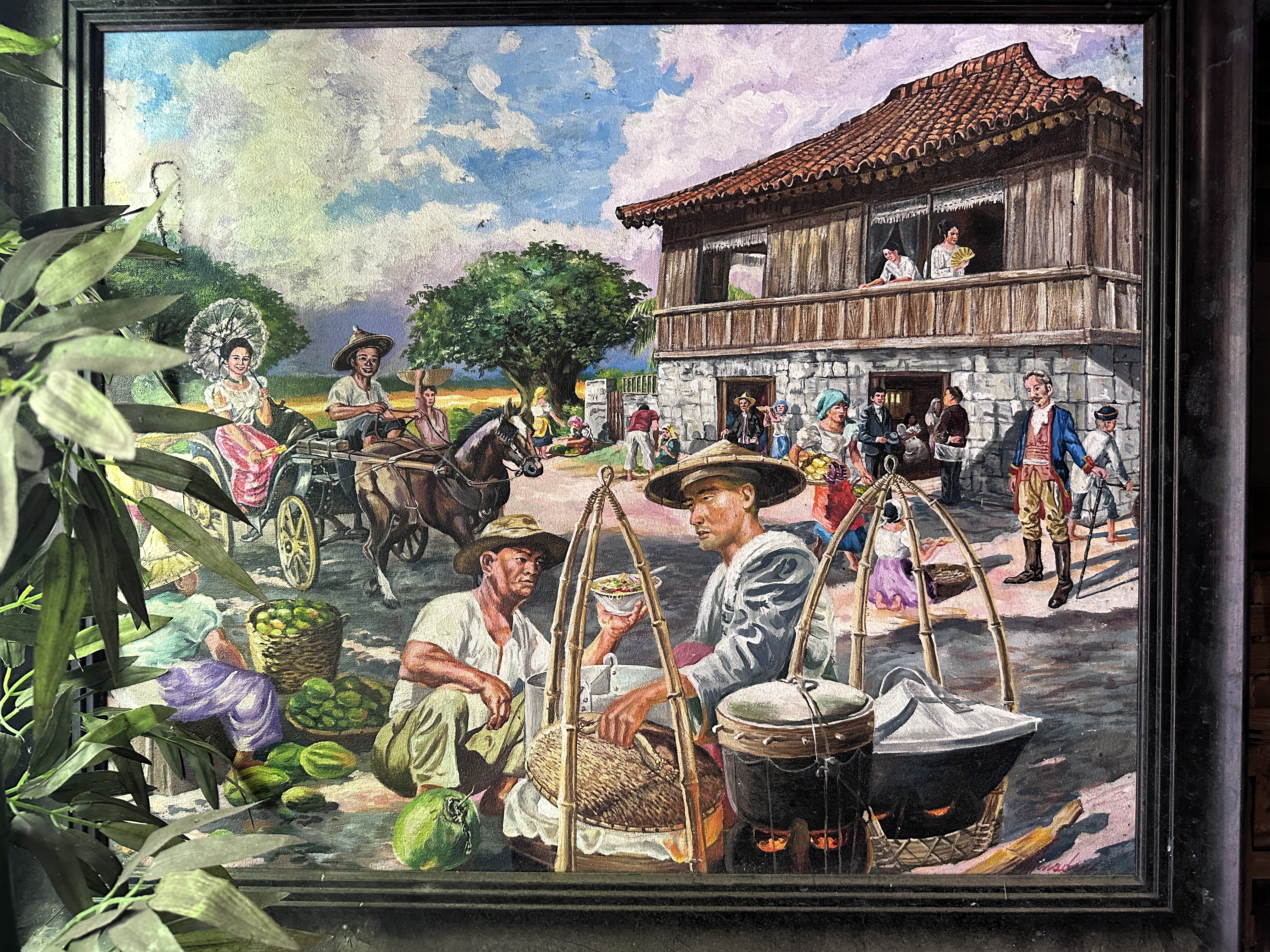
Constructed in the late 1600s, the Yap-San Diego Ancestral House in Cebu City claims to be one of the oldest surviving houses in the Philippines and the first-ever house built outside of China by Chinese immigrants. It originally belonged to a wealthy Chinese merchant, Don Juan Yap, and his Filipina wife, Doña Maria Florido. After eleven generations, the house most recently passed down to Doña Maria’s great-great grandson, Val Mancao San Diego, and his wife, Ofelia, in 2008. Val San Diego is “the choreographer of the San Diego dance company. He is also an art collector. He turned the house into a museum that features his ancestors’ history, making it one of the most visited attractions in Cebu,” the introduction for tourists states. On the ground floor, there are several long dining tables and numerous knickknacks and heirlooms in glass cases, figurines and tableware of the sort you’d more likely encounter in a thrift shop than an antique shop. The second floor contains more dining setups in several rooms, and a bedroom with a canopy bed.
It’s a charming and well-preserved old house, but I wonder why there are so many dining rooms and only one bedroom. Returning to the first floor, I query the attendant.
“The ground floor used to be just for storage and to keep animals,” he explains, which makes sense, as most houses the world over kept animals on the ground floor before the modern era. “Where do you come from?” he asks.
“The U.S.”
“We need you. To protect us from China.”
“Careful,” I say in mock seriousness, pointing to the second floor, “My wife is Chinese.”
“Most Chinese outside of China don’t like China,” he replies.
I’m curious to know whether he, an attendant at an historical site commemorating Chinese heritage in the Philippines, misspoke, or his views do reflect the mainstream and there is a real divide between the Chinese diaspora and the Mainland. But this is at a time when the U.S. is doing everything in its power to alienate the world. Already a Grab driver in Cebu complained to us about the skyrocketing gasoline prices after Iran closed the Strait of Hormuz, a predictable consequence of Trump’s stupid and reckless war on Iran. More and more countries are turning to China, a country that invests in its infrastructure rather than wars, as well as in even-keeled, mutually beneficial diplomacy, including with the Philippines, despite years of squabbling over territorial rights in the West Philippine Sea, which China doesn’t recognize. I won’t spend any more time trying to predict the future, except to state the obvious that China is on the way up, and the U.S. is on the way down, like it or not. The Philippine Government, even if still profoundly influenced by America, surely understands this.
MANILA
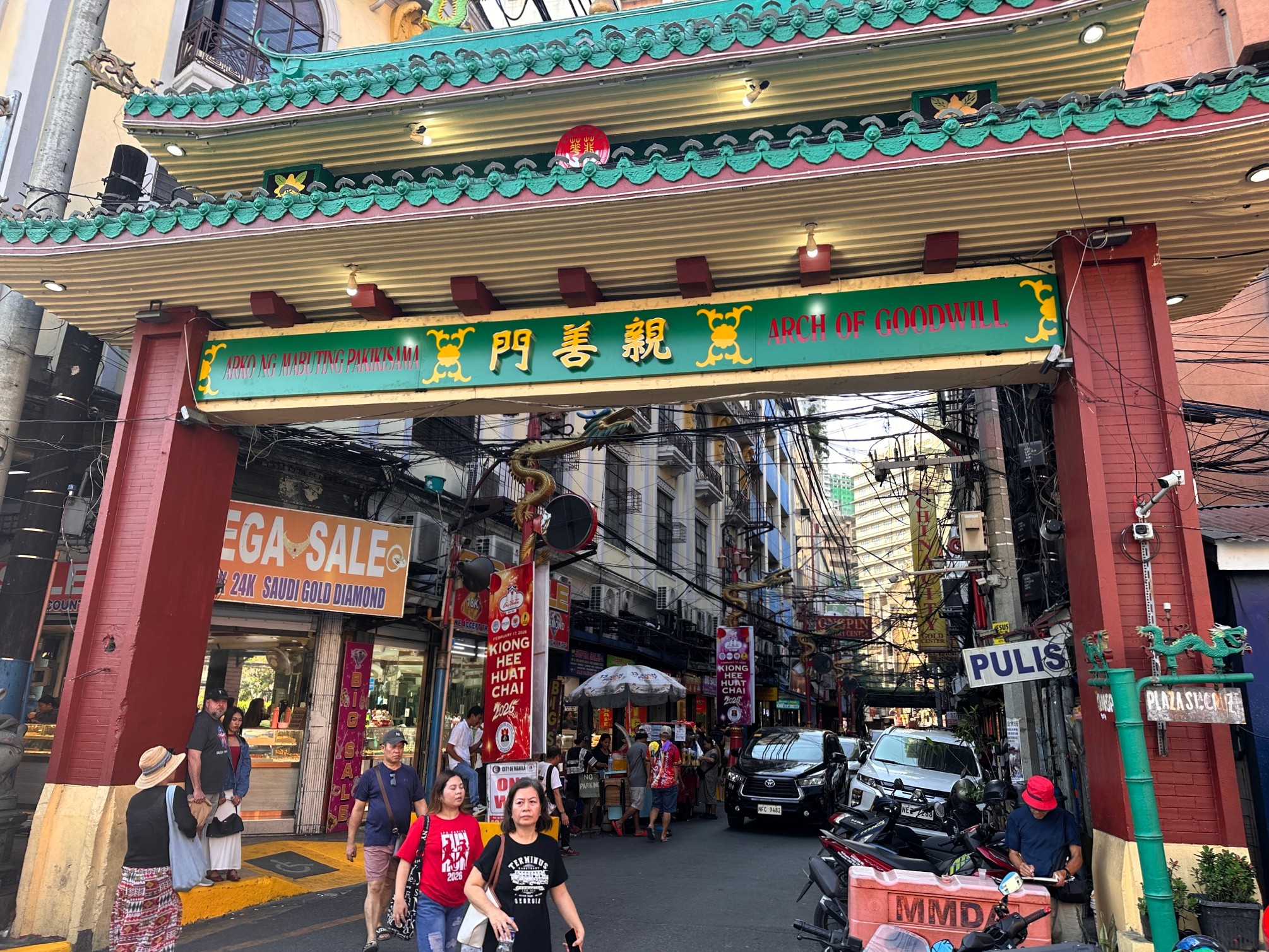
Back in Manila, I return to the Well Being Nature Spa Massage, where I had my first massage. I’m curious to see if a different masseuse does as good a job as the last. I bring my wife, who is in the adjacent room, separated by a retractable wall. They send me the same lady as before. I politely explain that I was quite pleased with her last treatment but want to try someone else. The poor lady. I gather returning clientele always choose the more attractive ones and she’s left last. Now I indeed get a very pretty masseuse, who gives a fastidious but uninspired, one-size-fits-all treatment. My wife is more or less satisfied with hers, but her stomach isn’t digesting her lunch as it should, and she heads back to the hotel to rest.
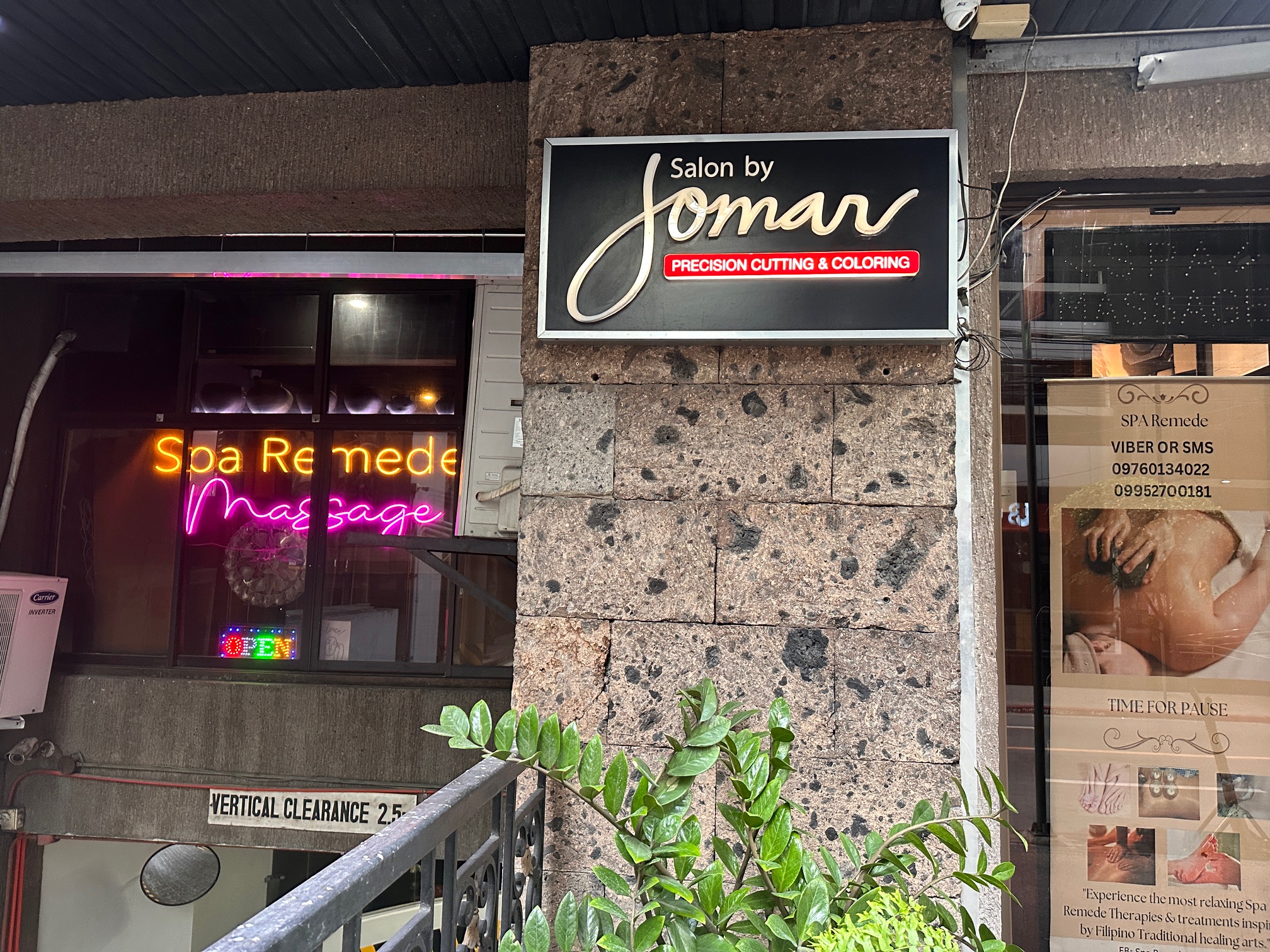
I wander around the neighborhood in my own miserably deficient state looking for another massage shop that might bring things to fruition. Luckily one’s nearby, the Spa Remede, with Swedish for 788₱. I’m wary as I step into the cramped entrance. The woman who greets me has a weary look about her, and there’s no sign of other customers. The booth is small but clean, the massage table regulation size and solidity. The woman who enters is on the young side and gruffly polite. “What’s this?” she says, tugging at my money belt which I forgot to remove, when she adjusts the towel over me. There’s no fussiness about underwear.
I’m blown away by the superb treatment. She actually listens to me when I ask her to work my butt and inner thighs more strongly and zeroes in on the region, including the perineum and prostate, with a surgeon’s concentration. She is very therapeutic, rather than erotic, but that’s okay since she’s doing such a good job. I get mildly erect here and there when she plows into the base of my penis but not aroused: we’re both on a different wavelength, more of a psychedelic than sexual intoxication, skirting the exquisite edge of pain, like the difficult work you have to go through on an acid or mushroom trip, yet deeply satisfying. I extend the hour to ninety minutes and would have stayed for two hours, but I have to get back to the hotel. It’s a massage I can rank among the top five great massages I’ve ever had, right up there with Wuhan 2004, Bangkok 2013, Taipei 2013, and Chiang Mai 2016.
WORKS CITED
Ang-See, Teresita. “Marital law, EDSA revolution, and beyond: Tsinoy political identity formation,” in Martial Law in the Philippines: Lessons and Legacies, 1972-2022, Ed. De Jesus and Baysic (Ateneo de Manila UP, 2023).
Cornelio, Jayeel S. “Christianity in a time of authoritarian nostalgia: Why we need a public theology today,” in Martial Law in the Philippines: Lessons and Legacies, 1972-2022, Ed. De Jesus and Baysic (Ateneo de Manila UP, 2023).
Lim-Lopez, Jade. “Chinese Filipinos: Transecting 1521.” Philippines Graphic [https://philippinesgraphic.com.ph/2021/03/21/chinese-filipinos-transecting-1521/].
Pigafetta, Antonio. Magellan’s Voyage: A Narrative Account of the First Circumnavigation. Trans. R. A. Skelton (Dover, 1994).
Rizal, José. Noli Me Tángere (Touch Me Not). Trans. Augenbraum (Penguin, 2006).
Scott, William Henry. Cracks in the Parchment Curtain and Other Essays in Philippine History (Quezon City: New Day Publishers, 1982).
* * *
Related posts by Isham Cook:
Massage vibrations in Vietnam
Psychedelic massage
Massage and the Writer: Essays on Asian massage
Massage diary: Laos, Thailand, Cambodia, Vietnam
American massage
Massaging the Yin-Yang in Pattaya
Massaging the masseuse in Beijing and Bangkok
Music for massage, meditation, sex, and psychedelics
Also by Isham Cook:
THE TAO OF POISON
“The bold characters, kinetic plot, and rich sense of atmosphere make this epic tale a studied contemplation of how beauty can usher in tragedy and sorrow.” — BookLife Reviews by Publishers Weekly



Leave a Reply